This bridge is in the vicinity of the stone circle in the previous post.
It was built in 1829, is 43 m long and 6 m wide.
Traffic nowadays goes over a more modern bridge close by.
I’m entering this post for Watery Wednesday


This bridge is in the vicinity of the stone circle in the previous post.
It was built in 1829, is 43 m long and 6 m wide.
Traffic nowadays goes over a more modern bridge close by.
I’m entering this post for Watery Wednesday
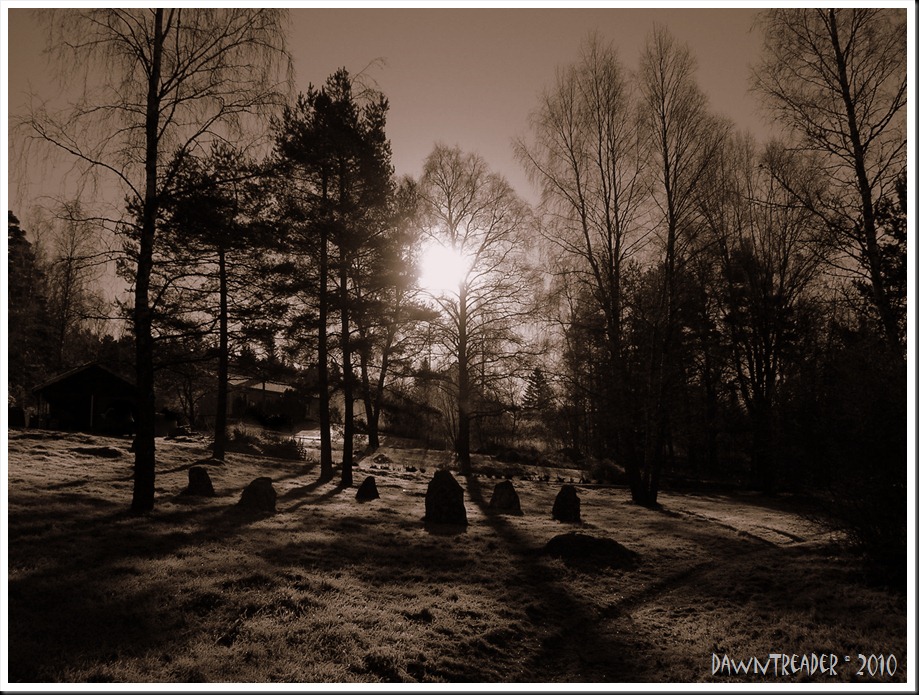
In “the middle of Nowhere” there is an old stone circle.
(“Nowhere” is a translation of the name of the place,
rather than an accurate description of the present-day surroundings)
.~.~.~.
I took several photos experimenting a bit with exposure because the best view was against the light.
The one above came out the best, not as the most realistic, but as the most magical… ;)
Here is a shot from the other direction… a bit “tampered with”… compare below…
.~.~.~.
And here are both photos again, in b&w/sepia:
The stone circles of the Iron Age (ca. 500 BC – ca. 400 AD) were a characteristic burial custom of southern Scandinavia, especially on Gotland and in Götaland during the Pre-Roman Iron Age and the Roman Iron Age. In Sweden, they are called Domarringar (judge circles). The circles are usually round, or elongated ellipses. The stones may be very large and they are usually between 9 and 12. Sometimes there are as few as 6–8. Excavations have shown burnt coal in the centre of the circles and they are nowadays considered to be incineration graves. There is also a widespread tradition that the circles were used for so-called “things”, or general assemblies.
(Source: Wikipedia)
‘Do we walk in legends or on the green earth in the daylight?'
‘A man may do both,' said Aragorn. 'For not we but those who come after will make the legends of our time. The green earth, say you? That is a mighty matter of legend, though you tread it under the light of day!’
~ J.R.R. Tolkien ~
For more Weekend Reflections visit Newton Area Photo


 Posts
All Comments
Posts
All Comments

 |