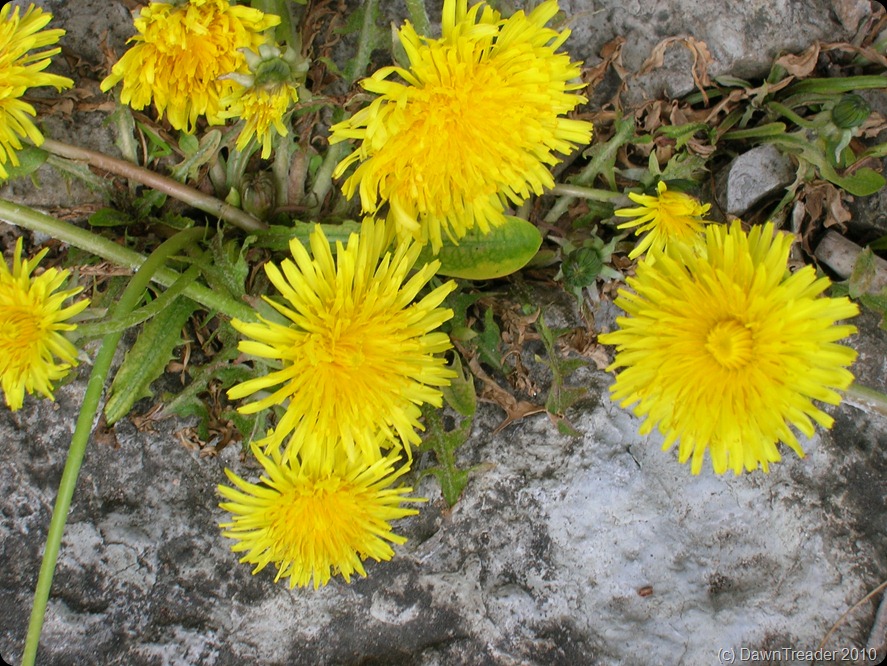
Dandelion – Taraxacum – Maskros
The English name dandelion is a corruption of the French dent de lion meaning "lion's tooth", referring to the coarsely toothed leaves.
The Swedish name maskros means "worm rose", which is said to have to do with the small insects usually present in the flowers.
I’m rather surprised that this flower doesn’t seem come with a whole range of alternative popular names, as many of the other wild spring flowers do.
Dandelions are thought to have evolved about thirty million years ago in Eurasia; they have been used by humans for food and as a herb for much of recorded history. They were introduced to North America by early European immigrants.
It is considered a weed and here people usually don’t want it in their lawns. But it is actually a beneficial weed, with a wide range of uses. It has been described as "a plant for which we once knew the use but we've forgotten it". Did you know, for example, that…
- Its ability to break up hard earth with its deep tap root, bringing up nutrients from below the reach of other plants, makes it a good companion for weaker or shallower-rooted crops, including tomato plants.
- Dandelions are important plants for bees as an important source of nectar and pollen early in the season.
- A cup of dandelion leaves contains 112% daily recommendation of vitamin A, 32% of vitamin C, and 535% of vitamin K and 218 mg potassium, 103 mg calcium, and 1.7 mg of iron.
- Dandelions leaves can be picked in the early spring before they become tough. They are best before the flowers bloom.
- The flowers can be sauteed in butter or oil as a vegetable dish, or dipped in tempura batter and fried. The flower petals, along with other ingredients, are used to make dandelion wine.
- The roasted, ground roots can be used as a caffeine-free dandelion coffee.
- The root can also be cooked and eaten.
- Dandelions, flowers, roots and leaves, have been used for centuries in traditional Chinese medicine & medicinal teas, most notably for liver detoxification and as a natural diuretic.
- Dandelion pollen however is a common allergen and may be responsible for asthma, allergic rhinitis, allergic conjunctivitis and contact dermatitis in sensitive individuals.
(Most of the facts from the Wikipedia article.)


 Posts
Posts